
true stories about being alive
crafted by Isa Adney
a true story about cancer & why sometimes the hardest part comes after everyone thinks you’re fine
Date:
September 11, 2025
Content warning: cancer, genetic testing, parental loss
*
I saw Lindsay dance before I knew her story.
We met at an in-person meetup for an online group we’re both a part of, one where people come together over a shared interest in theme parks, sarcasm, and brazen enthusiasm.
The music played over the speakers and of the few hundred people there, we were a few of the only ones dancing.
This was not a dance.
But we danced anyway.
And that, I guess, is how we found each other.
Lindsay made me laugh a lot that night. She was the kind of alive you don’t remember you ever were until you’re near her. She looks at you and you’re 16 again, laughing on a kitchen floor at a sleepover at 2am, eating chocolate pudding you just made with your best friend while Simple Plan plays in the background.
I didn’t know why Lindsay was the way she was. I just knew, like you know when you’re very young or very lucky, that I wanted to be her friend. And soon, I would learn, I’d also want to tell her story.
*
A lot of people kept telling Lindsay she needed to write her story—a book maybe, that it would help people. Lindsay helps people in so many ways, but, as she told me in a DM one day, a book just sounded so overwhelming and she didn’t have the time to write it all out; would I ever maybe, and no pressure of course, want to tell her story?
I felt honored she would trust me with such a story, and said yes immediately.
*
Both of our eyes are drooping when we meet a few months later over Zoom. We laugh about how we don’t usually stay up past midnight but the night before we both stayed up way past our bedtime to watch the livestream of the final show of the Taylor Swift Eras Tour.
So naturally, before the interview, we talk about glitter. I tell her how the line from the “New Year’s Day” song, about glitter staying on the floor after the party, hit me differently last night…the idea that sometimes, long after the party is over, the glitter still glitters.
“Glitter stays forever,” Lindsay agrees, and tells me about the Winter-Olympics themed party she and her husband threw in 2010, how they’d made medals out of construction paper and glitter and how years later when they ripped up the carpet to refinish the hardwood floors there was still glitter there.
*
When Lindsay was a kid she and her dad would sit on carpet to play Uno together across the coffee table. She would lay all her cards under the coffee table because she couldn’t hold them all with her tiny nine-year-old hands, and her dad could never tell when she was down to Uno because she never showed all her cards. She won a lot, and he never minded.
When she was older, Lindsay became pregnant with her first daughter; when her due date came, she didn’t go into labor, but she did get a call. One the day her daughter was supposed to be born, Lindsay’s dad called to tell her he’d just been diagnosed with pancreatic cancer.
Just a few weeks after Lindsay’s baby girl Kate was born, she answered another one of those phone calls that, if you’d known, you wouldn’t have wanted to pick up, would have wanted to live just a little longer in the “before.” But you pick up.
Lindsay’s dad was calling with the final results from his tests. His cancer was stage four.
“I’m not going to be there to watch her grow up with you,” her dad said. “I’m not going to be there to see her graduate high school and get married.”
They wept together on the phone, baby Kate in Lindsay’s arms.
*
Over the next few months, Lindsay’s dad tried chemo and other treatments, but it was soon clear that none of it was working. They focused on making him as comfortable as possible and making the most of whatever time they had left, like Lindsay bringing him books to record his voice with so that Kate and any future grandkids would get to hear their grandpa read to them.
After a series of strokes, he was bedbound, and on what would be her last time seeing her father, Lindsay laid next to him in what used to be her childhood bedroom. “I told him everything I wanted him to know,” she says.
A few days later, while at home during her lunch hour to wait for a new couch to get delivered, Lindsay got the call from her stepmom. Her dad was gone.
It was October 15th, her two-year wedding anniversary.
Lindsay’s husband rushed home and brought her a box of Oreos: “We sat on our brand-new couch and cried.”
Before her stepmom got off the phone, she told Lindsay, “Your wedding day was one of the happiest days of his life. So when you remember him on this day, don’t remember him as the frail man in the bed. Remember him two years prior, so happy.”
October 15th is still a special day for Lindsay. “That day has always held this duality that I think is so telling of life,” she says. “The human experience is that we hold both joy and grief together. We can’t have one without the other.”
*
About a year later, Lindsay became pregnant again, and during a routine doctor’s appointment her nurse practitioner noticed the history of breast cancer in her family on her chart and asked Lindsay if she’d be interested in genetic testing to see if she was a candidate for preventative surgery.
“I looked her straight in the face,” Lindsay remembers, “and said, ‘I can’t.’”
She associated so much of her first pregnancy with her dad’s cancer and didn’t want her next pregnancy to be associated with cancer too.
The nurse practioner told her it would be pretty rare for her to have one of the genetic mutations even with such a strong family history of cancer. “I know,” Lindsay said, “but if it comes back that it’s positive I just…I just can’t associate this pregnancy with cancer too. I just can’t. I see the value in it and I promise you I will come and get tested after this baby is born.”
Lindsay did go back for genetic testing in December 2015, after her second daughter Evelyn was born.
In January 2016, Lindsay returned for a visit with the nurse practitioner to discuss the results, but when a doctor walked in, she knew it wasn’t good.
“He comes in and gives me this gigantic hug,” she says, “and I thought, ‘Ok, I know where this is going now…’”
They told her she had the BRCA 2 mutation, which meant she was at high risk for cancer. It was a gene she’d inherited from her dad. She remembers having “a lot of feelings.” Then they gave her a folder and a long list of appointments.
But she felt more empowered than doomed: “Now I know what we’re dealing with and we just gotta run the play.”
She was determined to use whatever information was in that folder to prevent cancer from happening to her so she could see her kids grow up.
Lindsay made appointments for preventative surgery to remove the breast and ovarian tissue that could likely develop cancer. But when Lindsay went in for surgery prep, they found out it was too late for preventative measures. Lindsay already had cancer.
She remembers her husband standing in the kitchen when she walked in the door after the appointment. Even though at that point the doctors weren’t sure the lumps they found were cancer, Lindsay says she knew then. She just knew.
She hugged her husband in the kitchen and sobbed/said the following:
“I don’t want to be sick.”
“I don’t want to do this.”
“This wasn’t how this story was supposed to go.”
“I was supposed to get to this before it had the chance to get to me.”
She’d just lived this story with her dad, and she didn’t like the ending.
*
The doctors called Lindsay a few days later with the official diagnosis. Lindsay had breast cancer.
Lindsay says her “nerdy” nurse self took over first. She researched. She met with her specialists and her surgeon. She rationalized.
“We already had a plan,” she says of her thinking then. “We’re just gonna move the timeline up. It’s gonna be super easy. Instead of doing surgery in September, we’re just gonna do surgery in August and I’m gonna have the same surgery I had planned on having this whole time. No big deal, and life is gonna go on as normal.”
Then her oncologist told her she would also need chemotherapy.
“No big deal,” Lindsay thought. “We’ll just do that after surgery, and I’ll have time to process that.”
“No,” her oncologist said, “you’re going to need to do it before surgery.”
“I was so mad at her,” Lindsay says. “So mad. Who am I to tell this oncologist what’s gonna happen? I didn’t know anything. But in my head I was like, ‘No that was not the plan.’”
Lindsay, a labor and delivery nurse, was used to having more control in medical situations. But this one was happening to her, and as much as she tried to control it, she could feel even then that it was getting bigger than she could handle on her own. For her, the loss of control was the worst side effect.
*
Lindsay began chemo and continued to go to work. Her mom also moved in with her for a little while and did Lindsay’s laundry every Monday.
“Speaking of laundry,” Lindsay tells me, she has to step away from the interview for a moment to put some laundry in the dryer because her daughter’s jersey is in the wash and she has volleyball tonight.
She runs out of the room and off my screen for a moment to switch over her daughter’s laundry.
When she returns, she starts talking about how in addition to all the wonderful people who showed up and helped with practical things and sent her food, having a sense of humor also helped a lot.
“Facing your own mortality,” she says, “is so serious and heavy that if you live in that all day every day, it’s just not feasible. A wise woman in my support group told me early on in my diagnosis: ‘You’re allowed to have a bad day, but you can’t have two bad days in a row.’
“Sadly we lost her to cancer, but that always stuck with me and that has been a legacy of hers that lives on through me, because I say that to all of my clients now.
“You can’t go through this with rose-colored glasses and not acknowledge the reality of what you’re living through. But you also can’t stay there.
“If today’s gonna be your day where you’re imagining your funeral and what your family’s gonna say about you when you’re dead and how you’re not gonna be there for your kids on their wedding day and you’re not gonna see them go to prom and you’re not gonna see them graduate, live in that valley, feel the feelings and be there.
“But then tomorrow you don’t get to stay there. You can revisit it, but you need at least a day in between where you’re picking yourself up and you’re going to find the good.”
Lindsay tells me about all the old snapchat selfies she has of her waiting in the oncology office with “stupid filters” on, like her head as a balloon.
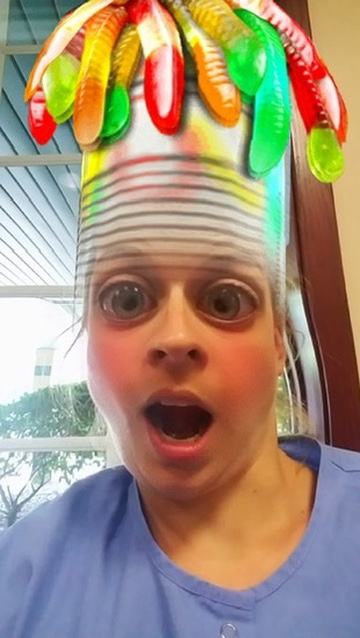
“Finding the humor in some of that was really fun,” she says. “And it helped in the process of pulling myself out of those days where you’re in the valley and you wanna stay in the valley.”
*
Lindsay mostly continued going to work during chemo; she took some time off when she needed to, but initially she found the normalcy of work to be helpful. “My job was a big part of my identity,” she says, “and I’m a very cerebral person. So being able to still feel like I was contributing and using my brain during such an uncertain time was nice.”
Until it became too much.
A nurse manager of a busy labor and delivery unit, she had 90+ direct reports, and performance review season was coming.
She got a really bad chest cold during that time, and her boss told her she absolutely did not need to be the one to do the performance reviews and could take this time off. But Lindsay was adamant: “In my head I thought, ‘No this is one of the biggest parts of my job.’ I have memories of sitting in the treatment chair getting chemo and typing these performance reviews in my laptop.”
She finished all of the performance reviews.
But.
“Looking back on it,” she says, “it was stupid. I shouldn’t have done it. I should have just let my director do it. But it was this sense of pride in ‘I can still do it all. I can still be a mom and have cancer and be a great boss and do the things other people count on me for.”
It was never about the performance reviews, not really. It was about trying to prove she was still the person she was before all this.
But of course, she wasn’t, and never would be.
And that’s why the period after cancer treatment ended up being one of the hardest seasons of all.
*
Lindsay finished chemo in December 2016, and then had major surgery to remove her breast and ovarian tissue on January 23, 2017.
But in the aftermath, Lindsay didn’t feel out of the woods, not really. “Because I knew that even despite all of that,” she says, “this cancer is known for coming back, especially in the first three years. So that was a heavy burden to carry.
“The thing that a lot of people don’t talk about with cancer treatment and survivorship, if you’re blessed to be considered in survivorship, is that the period after treatment’s over can mess with your head.
“Because everybody looks at you and your hair’s growing back and you beat it and you’re cancer free and you’re in remission and you must be so happy and we’re so happy for you and this was great…okay, bye! That village that forms around you when you’re in the thick of it, which is such a blessing to have, starts to go. People move on with their lives, as they should.”
As Lindsay explains it, the community moves on and the former cancer patient is left alone to contend with the fact that their whole life is different. They’re also suddenly bereft of the extra adrenaline that came with being in survival mode.
“I’d spent six months feeling a bear chasing me,” Lindsay says, “and now the bear was gone, and I’m left with all these deep and complex emotions I never dealt with because I was in fight or flight.
“You’re dropped off in Kansas after the tornado going, ‘What just happened to me?”
This is when grief showed up. When the relief-dust of making it out alive fell. When she finally had the time to look up and realize all she’d still lost. All that had still changed.
She was so grateful to be cancer-free, but while everyone else went back to normal, her old normal was gone. Now, after all that, she had to deal with the crippling reality of having to build a new one.
*
To start, Lindsay hyper-fixated on what she could do to lower her chances of cancer recurrence.
“There’s a mental safety net you’re trying to create,” she says, “so you can say to yourself, at least I’m still doing something.”
It’s scary to go from being seen all the time—having a team and a community working to support you becoming cancer-free—to then be on your own again.
“I felt like I still didn’t have any control over what was going to happen in my life,” she says.
And now, she knew how fragile things really were, how on any given day you can just be waiting for your new couch to arrive and your phone will ring and send you to the floor; later you’ll look back on the time just before your knees bent, when you were just standing there, waiting for that couch…you’ll remember it forever as the last time you felt ok. The last time you got to be the person you were before you knew how quickly the best things in life can disappear.
“I didn’t feel like myself until almost a year after the surgery,” she says. “There was also so much mental fatigue from the constant wondering of what was going to happen, and dealing with the question of ‘Am I still gonna be here?’”
But instead of running away from this new self, Lindsay wanted to lean into it. She wanted to find a way to use what she’d learned to help other people going through the same thing.
She changed her nurse specialty from labor and delivery to oncology, and became a nurse navigator for cancer patients.
Then, to be able to support and advocate for even more people, she started a private practice as a nurse coach.
“I just had this feeling, this pull, of ‘You’re meant to be bigger; you’re meant to do more; serve more people,” she says.
She also founded a rowing team for breast cancer survivors.
*
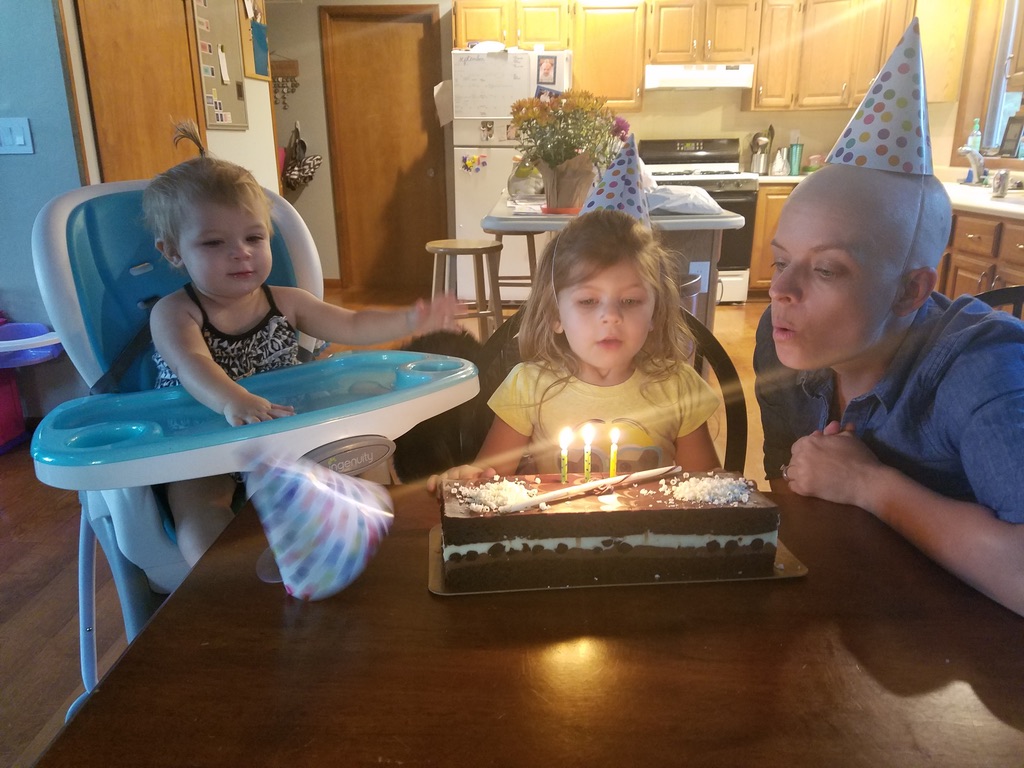
January 23 is the date Lindsay celebrates with her family every year as her cancer-free date. They always have a cake with candles for the number of years it’s been, and they take a family photo in the same spot.
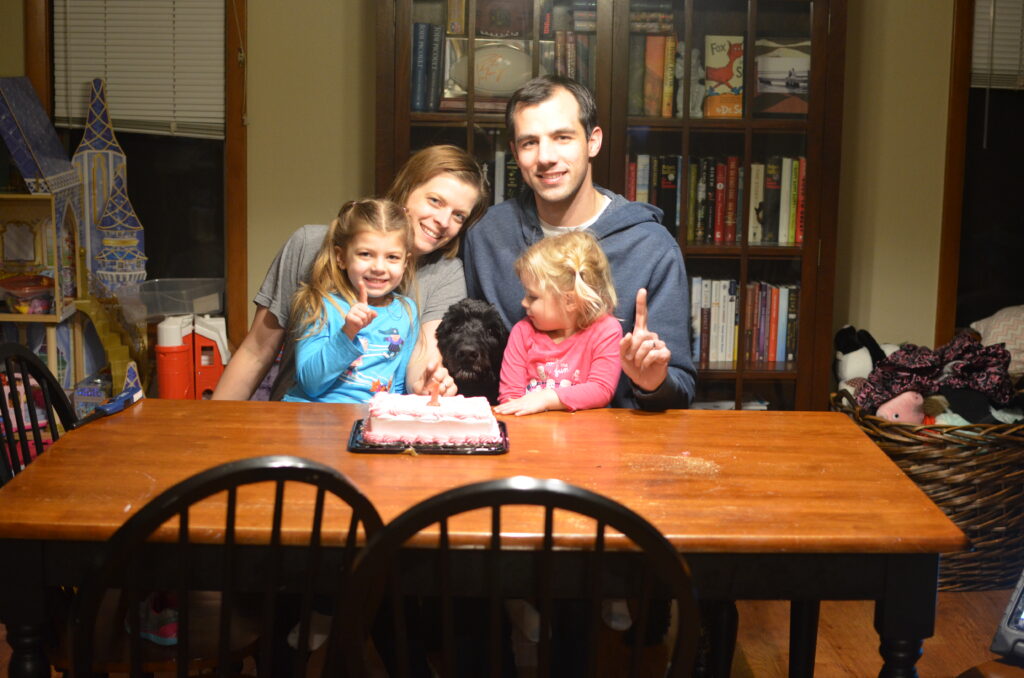
But Lindsay still struggles with survivor’s guilt, having walked alongside friends whose cancer journeys had a different ending.
Like one friend who was her same age, also with two kids, and who didn’t make it. “I looked at both of our stories on paper,” she says, “and I ask, ‘Why is my outcome different than hers? She did all the things right. She did everything she was supposed to do. And now her kids don’t have a mom and my kids do.”
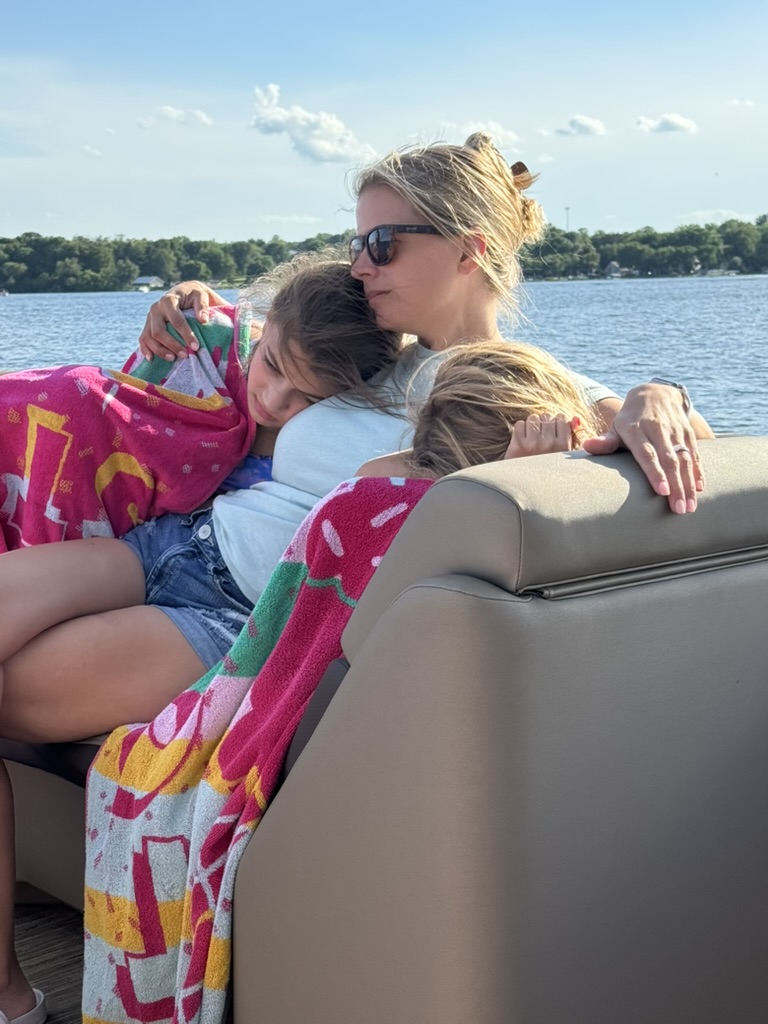
She carries that weight with her, but tries her best to use it to motivate her to continue to make the most of what she almost didn’t have.
Like when the Eras Tour was going to be three hours from her home and she bought last-minute tickets two days before the show for her and her daughter, glitter sticking to their shoes as they left.
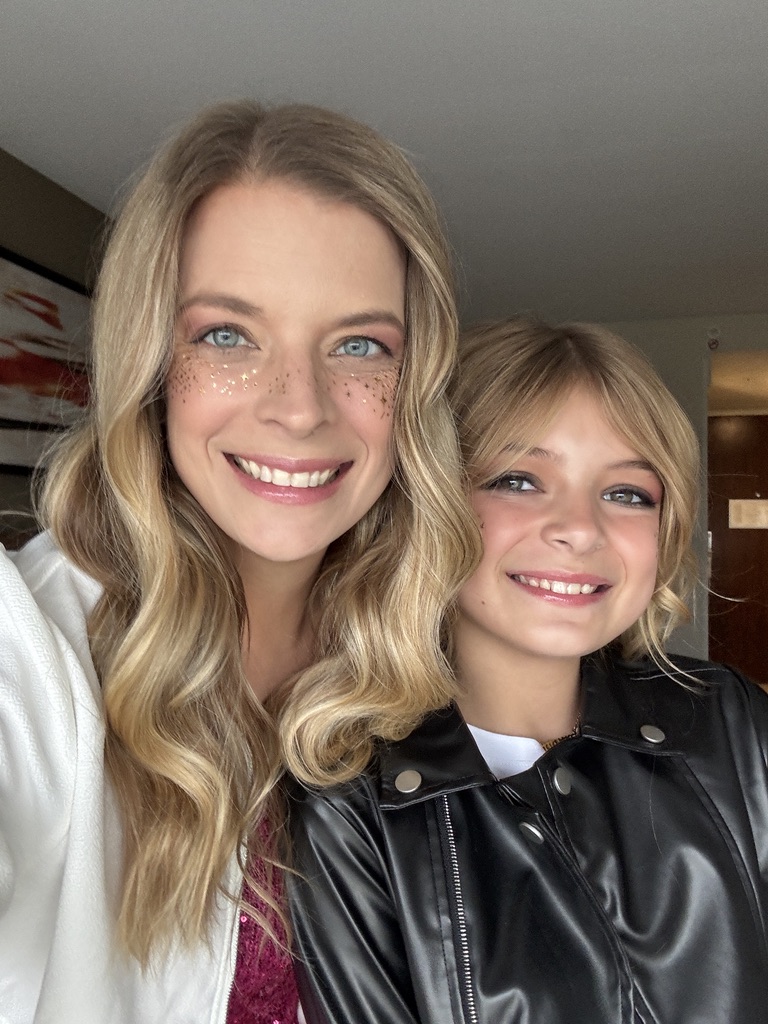
But before we can go on another Taylor tangent, Lindsay tells me she has to go: volleyball practice is happening soon and she needs to make her daughter dinner.
It’s the only time my eyes fill, because for a moment I imagine what it could have been like had the story been different: her daughter coming home from school to a quiet house, wishing her mom was there. Instead their family is still nourished with the kind of daily glories we can’t see until we almost lose them: putting wet clothes into a dryer, heating up leftover soup, driving someone somewhere just to sit and watch them play.
*
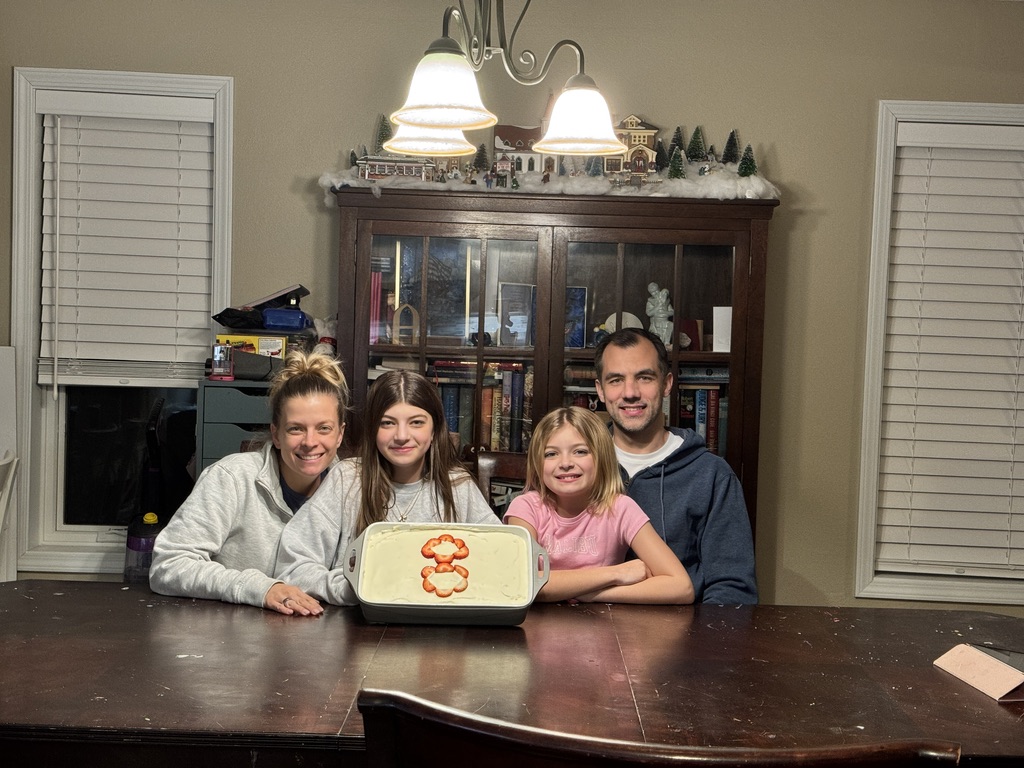
If you’d like to connect with Lindsay, you can find her on Instagram.


The Little Book of Big Dreams is filled with true stories of dreamers who decided to try for their biggest dreams and kept going when things got hard (which they almost always do).
The dreamers in this book include Oscar winner Kristen Anderson-Lopez, Disney producer Don Hahn, Pensole Lewis College founder D’Wayne Edwards, Hamilton cast member Seth Stewart, Black Girls Code founder Kimberly Bryant, and more.
But the most important story in this book is yours.
The Little Book of Big Dreams: True Stories about People Who Followed a Spark
order The Little Book Of Big Dreams
spark your next dream

© Chronicle | Legal | Site Credit |

